
2026 Town of Kingsville Municipal Election - Questions for Town Staff
Welcome to Questions for Town Staff
This project page is a resource for candidates running in the 2026 Municipal Election and has been created to help ensure all candidates have equal access to the same information throughout the election period. It is also a resource for residents interested in the same information.
Candidates for election may have questions about municipal services, budget, projects, policies, processes, or other questions that will help inform their platform and conversations with residents. Additionally, residents may have similar questions that they wish to have answered.
The Town's senior staff are happy to support you by providing information and responding to questions whenever possible.
Candidates and residents can ask questions through this portal or by emailing requests@kingsville.ca. Please indicate if you want to remain anonymous or be identified as the person asking the question. Questions and answers will be posted here for all candidates and the public.
The Town Clerk is responsible for managing the election. If you have a question or concern that relates to the election process itself, please reach out directly to the Clerk at clerks@kingsville.ca
See the Town's dedicated election pages, which include the unofficial list of candidates at kingsville.ca/election.
Welcome to Questions for Town Staff
This project page is a resource for candidates running in the 2026 Municipal Election and has been created to help ensure all candidates have equal access to the same information throughout the election period. It is also a resource for residents interested in the same information.
Candidates for election may have questions about municipal services, budget, projects, policies, processes, or other questions that will help inform their platform and conversations with residents. Additionally, residents may have similar questions that they wish to have answered.
The Town's senior staff are happy to support you by providing information and responding to questions whenever possible.
Candidates and residents can ask questions through this portal or by emailing requests@kingsville.ca. Please indicate if you want to remain anonymous or be identified as the person asking the question. Questions and answers will be posted here for all candidates and the public.
The Town Clerk is responsible for managing the election. If you have a question or concern that relates to the election process itself, please reach out directly to the Clerk at clerks@kingsville.ca
See the Town's dedicated election pages, which include the unofficial list of candidates at kingsville.ca/election.
Questions for Staff
Please note that there may be situations where we are unable to answer a question due to confidentiality requirements, legislative restrictions, or because the request would require extensive staff research. If this occurs, we will notify you privately.
To ensure all candidates receive the same information, all questions and responses will be shared publicly. Your screen name may be visible alongside your submission. If you prefer to remain anonymous, please use an email address that is not already associated with a HYSK account and use "Anonymous" as your screen name.
If submitting through a registered account or by email to requests@kingsville.ca, let us know you’d like to remain anonymous and we’ll post your question on your behalf without your name.
-
Share Parks & Recreation – Long-Term Soccer Field Strategy Questions: This season, two soccer fields have been taken out of service to allow for resting and restoration, which demonstrates the importance of long-term asset management. Could Administration provide an overview of the long-term strategy for the Town's soccer fields, including: The overall condition assessment of existing fields. The long-term rehabilitation and replacement plan. Whether field closures and restorations will be phased strategically to minimize impacts on user groups. Any plans for additional fields or improvements as participation continues to grow. Providing this information would help residents better understand the long-term planning behind these decisions. on Facebook Share Parks & Recreation – Long-Term Soccer Field Strategy Questions: This season, two soccer fields have been taken out of service to allow for resting and restoration, which demonstrates the importance of long-term asset management. Could Administration provide an overview of the long-term strategy for the Town's soccer fields, including: The overall condition assessment of existing fields. The long-term rehabilitation and replacement plan. Whether field closures and restorations will be phased strategically to minimize impacts on user groups. Any plans for additional fields or improvements as participation continues to grow. Providing this information would help residents better understand the long-term planning behind these decisions. on X (formerly Twitter) Share Parks & Recreation – Long-Term Soccer Field Strategy Questions: This season, two soccer fields have been taken out of service to allow for resting and restoration, which demonstrates the importance of long-term asset management. Could Administration provide an overview of the long-term strategy for the Town's soccer fields, including: The overall condition assessment of existing fields. The long-term rehabilitation and replacement plan. Whether field closures and restorations will be phased strategically to minimize impacts on user groups. Any plans for additional fields or improvements as participation continues to grow. Providing this information would help residents better understand the long-term planning behind these decisions. on Linkedin Email Parks & Recreation – Long-Term Soccer Field Strategy Questions: This season, two soccer fields have been taken out of service to allow for resting and restoration, which demonstrates the importance of long-term asset management. Could Administration provide an overview of the long-term strategy for the Town's soccer fields, including: The overall condition assessment of existing fields. The long-term rehabilitation and replacement plan. Whether field closures and restorations will be phased strategically to minimize impacts on user groups. Any plans for additional fields or improvements as participation continues to grow. Providing this information would help residents better understand the long-term planning behind these decisions. link
Parks & Recreation – Long-Term Soccer Field Strategy Questions: This season, two soccer fields have been taken out of service to allow for resting and restoration, which demonstrates the importance of long-term asset management. Could Administration provide an overview of the long-term strategy for the Town's soccer fields, including: The overall condition assessment of existing fields. The long-term rehabilitation and replacement plan. Whether field closures and restorations will be phased strategically to minimize impacts on user groups. Any plans for additional fields or improvements as participation continues to grow. Providing this information would help residents better understand the long-term planning behind these decisions.
Sheri Lowrie asked 2 months agoThe Town's soccer fields are heavily used throughout the season and, like any municipal asset, require ongoing maintenance and periodic rehabilitation to remain safe, playable, and sustainable over the long term. As part of the Town's long-term strategy, a comprehensive assessment of the soccer fields was completed in 2026, confirming issues such as heavily compacted soils, poor drainage, uneven grading, and declining turf conditions on several fields.
Based on the findings, Administration is implementing a phased rehabilitation program that includes drainage improvements, grading to improve field drainage and surface consistency, soil restoration, irrigation enhancements where appropriate, and reseeding to establish healthy turf. The work will be integrated into the Town's annual field resting schedule, with two fields taken out of service each year to allow for proper rehabilitation and recovery while minimizing impacts to user groups and maintaining field availability throughout the season.
Administration continues to work closely with the Town's long-standing soccer organizations to coordinate field use, communicate rehabilitation schedules, and balance field availability with the need to protect these important recreational assets.
As participation and community needs continue to grow, Administration will continue to monitor field conditions, usage levels, and future demand to help guide additional field improvements, potential expansion opportunities, and long-term capital planning. This phased approach allows the Town to make steady, sustainable improvements while extending the life of its existing soccer field inventory.
-Nada Tremblay, Director of Parks and Recreation
-
Share My question is in regards to an AI Centre(s) being built in the Town of Kingsville. There has been much mention of this item on FaceBook and other social media forums and I feel the Town should provide some clarification. 1. Has the Town of Kingsville been approached by a developer or the Province on the building of an AI Centre in Kingsville and if so, where is the proposed location. 2. Has the Town of Kingsville provided for the possible development of a data centre in its Official Plan or zoning by-laws or any other planning documents? 3. I have read that cities such as the City of Hamilton have passed interim control bylaws and moratoriums to halt the construction of data centres so that new rules can be developed for these centres. What control measures, if any, has the Town of Kingsville implemented to protect the residents in Kingsville (i.e. strict setbacks, height limits, and noise mitigation) should a data centre be built in Kingsville. on Facebook Share My question is in regards to an AI Centre(s) being built in the Town of Kingsville. There has been much mention of this item on FaceBook and other social media forums and I feel the Town should provide some clarification. 1. Has the Town of Kingsville been approached by a developer or the Province on the building of an AI Centre in Kingsville and if so, where is the proposed location. 2. Has the Town of Kingsville provided for the possible development of a data centre in its Official Plan or zoning by-laws or any other planning documents? 3. I have read that cities such as the City of Hamilton have passed interim control bylaws and moratoriums to halt the construction of data centres so that new rules can be developed for these centres. What control measures, if any, has the Town of Kingsville implemented to protect the residents in Kingsville (i.e. strict setbacks, height limits, and noise mitigation) should a data centre be built in Kingsville. on X (formerly Twitter) Share My question is in regards to an AI Centre(s) being built in the Town of Kingsville. There has been much mention of this item on FaceBook and other social media forums and I feel the Town should provide some clarification. 1. Has the Town of Kingsville been approached by a developer or the Province on the building of an AI Centre in Kingsville and if so, where is the proposed location. 2. Has the Town of Kingsville provided for the possible development of a data centre in its Official Plan or zoning by-laws or any other planning documents? 3. I have read that cities such as the City of Hamilton have passed interim control bylaws and moratoriums to halt the construction of data centres so that new rules can be developed for these centres. What control measures, if any, has the Town of Kingsville implemented to protect the residents in Kingsville (i.e. strict setbacks, height limits, and noise mitigation) should a data centre be built in Kingsville. on Linkedin Email My question is in regards to an AI Centre(s) being built in the Town of Kingsville. There has been much mention of this item on FaceBook and other social media forums and I feel the Town should provide some clarification. 1. Has the Town of Kingsville been approached by a developer or the Province on the building of an AI Centre in Kingsville and if so, where is the proposed location. 2. Has the Town of Kingsville provided for the possible development of a data centre in its Official Plan or zoning by-laws or any other planning documents? 3. I have read that cities such as the City of Hamilton have passed interim control bylaws and moratoriums to halt the construction of data centres so that new rules can be developed for these centres. What control measures, if any, has the Town of Kingsville implemented to protect the residents in Kingsville (i.e. strict setbacks, height limits, and noise mitigation) should a data centre be built in Kingsville. link
My question is in regards to an AI Centre(s) being built in the Town of Kingsville. There has been much mention of this item on FaceBook and other social media forums and I feel the Town should provide some clarification. 1. Has the Town of Kingsville been approached by a developer or the Province on the building of an AI Centre in Kingsville and if so, where is the proposed location. 2. Has the Town of Kingsville provided for the possible development of a data centre in its Official Plan or zoning by-laws or any other planning documents? 3. I have read that cities such as the City of Hamilton have passed interim control bylaws and moratoriums to halt the construction of data centres so that new rules can be developed for these centres. What control measures, if any, has the Town of Kingsville implemented to protect the residents in Kingsville (i.e. strict setbacks, height limits, and noise mitigation) should a data centre be built in Kingsville.
Giselle asked 2 months agoWe have certainly heard and read much in the media regarding AI Data Centres, especially those large centres that require municipalities to consider the impacts to infrastructure and the natural environment.
In answer to your specific questions:
- The Town of Kingsville has not been approached by any developer or the province on the building of an AI Data Centre.
- Kingsville’s zoning by-law does not allow large Data Centres in any of our zones, so we would require a rezoning and this would provide us an opportunity to study any environmental issues, noise, or other impacts as well as the economic, employment, and other factors.
- If a proposal is received, administration would provide recommendations to Council for decision based on the scale and scope of the project. Until we have an application before us, it is difficult to set rules that may or may not apply to the scale and scope of the project. A smaller project might be less problematic than the larger AI Data Centres which are making headline news.
Residents should know that steps are being taken to study the effects and impacts of AI Data Centres in Essex County. On July 13, 2026, the Town of Kingsville Council, by way of motion by Deputy Mayor Kim DeYong, requested that the County of Essex undertake a review and study of land use policies in relation to AI Data Centres. Deputy Mayor DeYong then made a motion which is scheduled for discussion at the Essex County Council meeting of August 5, 2026. The motion asks County administration to review land-use planning policies and gather information about the infrastructure, energy, and community impacts associated with AI data centres. For a news article on this item see here: https://www.cbc.ca/news/canada/windsor/essex-county-data-centre-study-9.7288794
- Director Richard Wyma and CAO John Norton
-
Share Will the Town of Kingsville Mayor Dennis Rogers, deputy mayor Kim DeYong, CAO John Norton or Richard Wyma be disclosing to the citizens of Kingsville the details of the court decision that was just released from Superior Court in which the Town of Kingsville was named as a defendant for the issue of the unsanctioned shooting range that was the issue of the Dec. 11/2023 council meeting in which the shooting range operator explained to the entire council how he runs his operation, including the competitions he holds, the guns he allows to be shot, amongst many other details. If the court decision will be released to the public, when will that be, and if not, why? Thank you. on Facebook Share Will the Town of Kingsville Mayor Dennis Rogers, deputy mayor Kim DeYong, CAO John Norton or Richard Wyma be disclosing to the citizens of Kingsville the details of the court decision that was just released from Superior Court in which the Town of Kingsville was named as a defendant for the issue of the unsanctioned shooting range that was the issue of the Dec. 11/2023 council meeting in which the shooting range operator explained to the entire council how he runs his operation, including the competitions he holds, the guns he allows to be shot, amongst many other details. If the court decision will be released to the public, when will that be, and if not, why? Thank you. on X (formerly Twitter) Share Will the Town of Kingsville Mayor Dennis Rogers, deputy mayor Kim DeYong, CAO John Norton or Richard Wyma be disclosing to the citizens of Kingsville the details of the court decision that was just released from Superior Court in which the Town of Kingsville was named as a defendant for the issue of the unsanctioned shooting range that was the issue of the Dec. 11/2023 council meeting in which the shooting range operator explained to the entire council how he runs his operation, including the competitions he holds, the guns he allows to be shot, amongst many other details. If the court decision will be released to the public, when will that be, and if not, why? Thank you. on Linkedin Email Will the Town of Kingsville Mayor Dennis Rogers, deputy mayor Kim DeYong, CAO John Norton or Richard Wyma be disclosing to the citizens of Kingsville the details of the court decision that was just released from Superior Court in which the Town of Kingsville was named as a defendant for the issue of the unsanctioned shooting range that was the issue of the Dec. 11/2023 council meeting in which the shooting range operator explained to the entire council how he runs his operation, including the competitions he holds, the guns he allows to be shot, amongst many other details. If the court decision will be released to the public, when will that be, and if not, why? Thank you. link
Will the Town of Kingsville Mayor Dennis Rogers, deputy mayor Kim DeYong, CAO John Norton or Richard Wyma be disclosing to the citizens of Kingsville the details of the court decision that was just released from Superior Court in which the Town of Kingsville was named as a defendant for the issue of the unsanctioned shooting range that was the issue of the Dec. 11/2023 council meeting in which the shooting range operator explained to the entire council how he runs his operation, including the competitions he holds, the guns he allows to be shot, amongst many other details. If the court decision will be released to the public, when will that be, and if not, why? Thank you.
JenE asked about 2 months agoThe decision of the Court is a public document and can be found here: Evers v. The Town of Kingsville, 2026 ONSC 4204 (CanLII), <https://canlii.ca/t/km572>
-
Share Did Kingsville receive any compenstion for the sale of ELK. How much and how will it be used to enhance our town? on Facebook Share Did Kingsville receive any compenstion for the sale of ELK. How much and how will it be used to enhance our town? on X (formerly Twitter) Share Did Kingsville receive any compenstion for the sale of ELK. How much and how will it be used to enhance our town? on Linkedin Email Did Kingsville receive any compenstion for the sale of ELK. How much and how will it be used to enhance our town? link
Did Kingsville receive any compenstion for the sale of ELK. How much and how will it be used to enhance our town?
Vicki asked about 2 months agoIn 2008, the Town of Kingsville sold all its shares in ELK Energy to the Town of Essex. News reports in July 2026 indicate that the Town of Essex recently received $21.9 million in net proceeds from the sale of the company to ENWIN Utilities. The Town of Kingsville will not receive any compensation or any portion of the proceeds from this sale.
- John Norton, Chief Administrative Officer
-
Share Hello I have asked the town twice in the last 12 months on what is happening with the relocation of the home at 183 Main St East. Nothing has happened for quite a while and what have could have been a nice project is now an incomplete blight. When will it be finished ? Here is the last response from the town dated Mar 26 2026 “ Thank you for your email regarding 183 Main Street. I have consulted with the Town’s Planning and Development Department and can confirm that the developer is proceeding with the project and is working with the Town to finalize the site plan for the property. Unfortunately, we are unable to provide a timeline as to when construction will start. Kind Regards, Angela Toole, BA(Hons), B. Ed. Manager of Municipal Governance / Clerk The Corporation of the Town of Kingsville Could we at least get an update and have the sight cleaned up ? It is embarrassing the way it sits now. Respectfully L.M.Fleming on Facebook Share Hello I have asked the town twice in the last 12 months on what is happening with the relocation of the home at 183 Main St East. Nothing has happened for quite a while and what have could have been a nice project is now an incomplete blight. When will it be finished ? Here is the last response from the town dated Mar 26 2026 “ Thank you for your email regarding 183 Main Street. I have consulted with the Town’s Planning and Development Department and can confirm that the developer is proceeding with the project and is working with the Town to finalize the site plan for the property. Unfortunately, we are unable to provide a timeline as to when construction will start. Kind Regards, Angela Toole, BA(Hons), B. Ed. Manager of Municipal Governance / Clerk The Corporation of the Town of Kingsville Could we at least get an update and have the sight cleaned up ? It is embarrassing the way it sits now. Respectfully L.M.Fleming on X (formerly Twitter) Share Hello I have asked the town twice in the last 12 months on what is happening with the relocation of the home at 183 Main St East. Nothing has happened for quite a while and what have could have been a nice project is now an incomplete blight. When will it be finished ? Here is the last response from the town dated Mar 26 2026 “ Thank you for your email regarding 183 Main Street. I have consulted with the Town’s Planning and Development Department and can confirm that the developer is proceeding with the project and is working with the Town to finalize the site plan for the property. Unfortunately, we are unable to provide a timeline as to when construction will start. Kind Regards, Angela Toole, BA(Hons), B. Ed. Manager of Municipal Governance / Clerk The Corporation of the Town of Kingsville Could we at least get an update and have the sight cleaned up ? It is embarrassing the way it sits now. Respectfully L.M.Fleming on Linkedin Email Hello I have asked the town twice in the last 12 months on what is happening with the relocation of the home at 183 Main St East. Nothing has happened for quite a while and what have could have been a nice project is now an incomplete blight. When will it be finished ? Here is the last response from the town dated Mar 26 2026 “ Thank you for your email regarding 183 Main Street. I have consulted with the Town’s Planning and Development Department and can confirm that the developer is proceeding with the project and is working with the Town to finalize the site plan for the property. Unfortunately, we are unable to provide a timeline as to when construction will start. Kind Regards, Angela Toole, BA(Hons), B. Ed. Manager of Municipal Governance / Clerk The Corporation of the Town of Kingsville Could we at least get an update and have the sight cleaned up ? It is embarrassing the way it sits now. Respectfully L.M.Fleming link
Hello I have asked the town twice in the last 12 months on what is happening with the relocation of the home at 183 Main St East. Nothing has happened for quite a while and what have could have been a nice project is now an incomplete blight. When will it be finished ? Here is the last response from the town dated Mar 26 2026 “ Thank you for your email regarding 183 Main Street. I have consulted with the Town’s Planning and Development Department and can confirm that the developer is proceeding with the project and is working with the Town to finalize the site plan for the property. Unfortunately, we are unable to provide a timeline as to when construction will start. Kind Regards, Angela Toole, BA(Hons), B. Ed. Manager of Municipal Governance / Clerk The Corporation of the Town of Kingsville Could we at least get an update and have the sight cleaned up ? It is embarrassing the way it sits now. Respectfully L.M.Fleming
LF asked 2 months agoThank you for the question. The Town issued a building permit for the relocation of the house at 183 Main Street East in July of 2024. The permit included the construction of a new foundation, the relocation of the house, and the reconstruction of the sewer and water services. As with all building permits in Ontario, this permit is subject to the Ontario Building Code regulations established by the Province of Ontario. The Building Code does not prescribe specific construction timelines; therefore, the owner and contractor are not required to complete the work within a set timeframe under the Building Code.
The Town of Kingsville Building Department has a process in place to address dormant or inactive building permits. This project has not yet met the legislated threshold to be considered inactive, but we will take action should that timeline expire.
- Robert Frias, Chief Building Official
-
Share Infrastructure Capacity and Growth Questions: Could Administration provide an overview of the Town's current infrastructure capacity and future planning as it relates to growth? Specifically: What are the current capacities of our water and wastewater systems? Which infrastructure projects are considered the highest priorities over the next five to ten years? What funding strategies are being pursued (grants, development charges, reserves, debt, etc.)? How does the Town ensure infrastructure keeps pace with approved development? This information would provide helpful context for candidates and residents as discussions about future growth continue. on Facebook Share Infrastructure Capacity and Growth Questions: Could Administration provide an overview of the Town's current infrastructure capacity and future planning as it relates to growth? Specifically: What are the current capacities of our water and wastewater systems? Which infrastructure projects are considered the highest priorities over the next five to ten years? What funding strategies are being pursued (grants, development charges, reserves, debt, etc.)? How does the Town ensure infrastructure keeps pace with approved development? This information would provide helpful context for candidates and residents as discussions about future growth continue. on X (formerly Twitter) Share Infrastructure Capacity and Growth Questions: Could Administration provide an overview of the Town's current infrastructure capacity and future planning as it relates to growth? Specifically: What are the current capacities of our water and wastewater systems? Which infrastructure projects are considered the highest priorities over the next five to ten years? What funding strategies are being pursued (grants, development charges, reserves, debt, etc.)? How does the Town ensure infrastructure keeps pace with approved development? This information would provide helpful context for candidates and residents as discussions about future growth continue. on Linkedin Email Infrastructure Capacity and Growth Questions: Could Administration provide an overview of the Town's current infrastructure capacity and future planning as it relates to growth? Specifically: What are the current capacities of our water and wastewater systems? Which infrastructure projects are considered the highest priorities over the next five to ten years? What funding strategies are being pursued (grants, development charges, reserves, debt, etc.)? How does the Town ensure infrastructure keeps pace with approved development? This information would provide helpful context for candidates and residents as discussions about future growth continue. link
Infrastructure Capacity and Growth Questions: Could Administration provide an overview of the Town's current infrastructure capacity and future planning as it relates to growth? Specifically: What are the current capacities of our water and wastewater systems? Which infrastructure projects are considered the highest priorities over the next five to ten years? What funding strategies are being pursued (grants, development charges, reserves, debt, etc.)? How does the Town ensure infrastructure keeps pace with approved development? This information would provide helpful context for candidates and residents as discussions about future growth continue.
Sheri Lowrie asked 2 months agoThe Town is currently undertaking an expansion of the settlement boundary within the primary Kingsville settlement area, with most of the designated growth lands located on the west side of the community. To support this growth, significant investments in water, wastewater, and transportation infrastructure are required.
Over the past several years, a new watermain has been constructed along Road 2 from Ruthven to the west side of Kingsville. This project has created additional water distribution capacity to accommodate future development in the area. In parallel, Union Water Supply System Inc. is implementing a multi-year expansion of its water treatment facility on Union Avenue, which will further enhance long-term water supply capacity for the region.
With respect to wastewater services, the Town has been transparent about existing capacity constraints within the Ruthven sanitary sewer system and the need for upgrades to the sanitary transmission network.
To plan for future growth, the Town recently initiated a comprehensive Water and Wastewater Master Plan. This study is evaluating projected development over the next 30 years and identifying the infrastructure improvements necessary to support anticipated growth. In addition, the Town's wastewater treatment plant is approaching its operational capacity, and planning is underway to expand the facility to meet future servicing demands.
Transportation infrastructure improvements will also be required. A key project identified in the Town's Transportation Master Plan is the expansion of the County Road 20 and Heritage Road intersection, including the construction of a new northbound roadway connection extending to Road 2. This corridor will serve as a critical transportation link for future growth areas on the west side of Kingsville.
The Town has successfully secured external grant funding to offset a portion of the costs associated with the new west-side road project at County Road 20 and Heritage Road, as well as improvements to the water distribution system. Administration continues to actively pursue additional funding opportunities to help address future wastewater infrastructure requirements.
Should funding from senior levels of government not be available, these capital projects will need to be financed through long-term debt. The associated costs would ultimately be recovered through a combination of development charges paid by new growth and wastewater rates paid by system users.
The Town remains committed to ensuring that critical infrastructure investments are planned and delivered in a responsible manner that supports growth while maintaining the long-term sustainability of municipal services.
John Norton, Chief Administrative Officer
-
Share Golf Course Development – Development Process and Resident Input Questions: Could Administration provide a summary of the planning history for the golf course development? Over the years, the proposal has appeared to evolve from an ambitious mixed-use concept that included a hotel and additional commercial amenities to the development currently under construction. It would be helpful to understand: The major milestones in the planning and approval process. How development proposals can change over time. Which approvals are required when changes are made. What has been approved to date and what remains outstanding. Additionally, during construction, residents often raise concerns regarding construction traffic, dust control, screening, fencing, road conditions, and other impacts on neighbour properties. Could Administration explain what authority the Town has to require or enforce mitigation measures and how residents' concerns are addressed throughout the construction process? on Facebook Share Golf Course Development – Development Process and Resident Input Questions: Could Administration provide a summary of the planning history for the golf course development? Over the years, the proposal has appeared to evolve from an ambitious mixed-use concept that included a hotel and additional commercial amenities to the development currently under construction. It would be helpful to understand: The major milestones in the planning and approval process. How development proposals can change over time. Which approvals are required when changes are made. What has been approved to date and what remains outstanding. Additionally, during construction, residents often raise concerns regarding construction traffic, dust control, screening, fencing, road conditions, and other impacts on neighbour properties. Could Administration explain what authority the Town has to require or enforce mitigation measures and how residents' concerns are addressed throughout the construction process? on X (formerly Twitter) Share Golf Course Development – Development Process and Resident Input Questions: Could Administration provide a summary of the planning history for the golf course development? Over the years, the proposal has appeared to evolve from an ambitious mixed-use concept that included a hotel and additional commercial amenities to the development currently under construction. It would be helpful to understand: The major milestones in the planning and approval process. How development proposals can change over time. Which approvals are required when changes are made. What has been approved to date and what remains outstanding. Additionally, during construction, residents often raise concerns regarding construction traffic, dust control, screening, fencing, road conditions, and other impacts on neighbour properties. Could Administration explain what authority the Town has to require or enforce mitigation measures and how residents' concerns are addressed throughout the construction process? on Linkedin Email Golf Course Development – Development Process and Resident Input Questions: Could Administration provide a summary of the planning history for the golf course development? Over the years, the proposal has appeared to evolve from an ambitious mixed-use concept that included a hotel and additional commercial amenities to the development currently under construction. It would be helpful to understand: The major milestones in the planning and approval process. How development proposals can change over time. Which approvals are required when changes are made. What has been approved to date and what remains outstanding. Additionally, during construction, residents often raise concerns regarding construction traffic, dust control, screening, fencing, road conditions, and other impacts on neighbour properties. Could Administration explain what authority the Town has to require or enforce mitigation measures and how residents' concerns are addressed throughout the construction process? link
Golf Course Development – Development Process and Resident Input Questions: Could Administration provide a summary of the planning history for the golf course development? Over the years, the proposal has appeared to evolve from an ambitious mixed-use concept that included a hotel and additional commercial amenities to the development currently under construction. It would be helpful to understand: The major milestones in the planning and approval process. How development proposals can change over time. Which approvals are required when changes are made. What has been approved to date and what remains outstanding. Additionally, during construction, residents often raise concerns regarding construction traffic, dust control, screening, fencing, road conditions, and other impacts on neighbour properties. Could Administration explain what authority the Town has to require or enforce mitigation measures and how residents' concerns are addressed throughout the construction process?
Sheri Lowrie asked 2 months agoIn 2018, Council gave approval for this location (adjacent to the Kingsville Golf and Country Club) to have two six-storey condominiums, each with 48 units, and additionally a low-rise hotel.
In 2023, the developers applied for approval for a scaled down development – 26 semi-detached condominium units instead of the two six-storey condos and hotel. Though the proposed development changed, the semi-detached dwellings still fit within the official plan and zoning regulations, so no additional approvals by Council were required.
At around the same time, in 2022, the Province passed Bill 109, the More Homes for Everyone Act, 2022, which required Councils to delegate approval of Site Plan Control to staff. This meant that Site Plan Control applications were no longer presented to Council for discussion or approval and are now reviewed and approved at the Administrative level. The Town has set up internal review teams to ensure that servicing, stormwater, and other planning issues are still addressed prior to approval.
Planning services did require the developer to host a Public Information Centre in July 2023 to share the revised proposal with the community and hear any issues or concerns that we can then capture in the Site Plan Agreement. For example, the Site Plan Agreement requires that the developer install construction fencing and screening, manage dust during construction, uses the Golf Course entrance as their primary construction access after servicing and stormwater management has been completed among other requirements.
During construction, residents can raise concerns or issues with the Town at Requests@Kingsville.ca, which will flag concerns that staff can investigate, work with the developer to correct as needed, and report back to the resident. It has been a useful tool to help us minimize construction impacts on the community.
-
Share How do we abolish the overnight parking in Kingsville? All this creates is way too many cars parked on the road because they can. Let's get rid of this foolishness bylaw. on Facebook Share How do we abolish the overnight parking in Kingsville? All this creates is way too many cars parked on the road because they can. Let's get rid of this foolishness bylaw. on X (formerly Twitter) Share How do we abolish the overnight parking in Kingsville? All this creates is way too many cars parked on the road because they can. Let's get rid of this foolishness bylaw. on Linkedin Email How do we abolish the overnight parking in Kingsville? All this creates is way too many cars parked on the road because they can. Let's get rid of this foolishness bylaw. link
How do we abolish the overnight parking in Kingsville? All this creates is way too many cars parked on the road because they can. Let's get rid of this foolishness bylaw.
Eye asked 2 months agoA municipal-wide prohibition on overnight on-street parking is not well suited to the Town. Kingsville’s streets and neighbourhoods have unique layouts and landscapes. Many subdivisions have homes with limited space for parking on private property, but there is space for on-street parking.
There are procedures in place to clear cars parked on streets that impede traffic or hinder the Town's ability to complete municipal operations. For example, on-street parking prohibitions are announced for snow removal or community events in accordance with Town By-laws, or residents can contact the OPP to report parked cars that are blocking traffic.
Residents may request parking prohibitions for their street. Public Works and Engineering review each request using site evaluations, best practices, and technical standards to determine if the request is appropriate. If the request is supported by objective data, the prohibition is recommended to Council for incorporation into the Town’s Traffic By-law and enforced by the OPP and By-law officers.
Administration believes it is important to take an objective case-by-case approach to on-street parking, rather than imposing town-wide restrictions. Ultimately the elected Council makes the final decisions in these matters.
-
Share In regard to a new greenhouse property tax classification and relating it to the upcoming election, does the Town have any plans to meet with MPP's or the provincial government to initiate a change to this classification? What direction has administration been given to advocate for this action? Can administration provide an estimate as to how much greenhouse operations are costing other ratepayers (including ongoing/upcoming expansion of the sewage and water transmission & treatment infrastructure, road rehabilitation, storm water drainage rehabilitation). on Facebook Share In regard to a new greenhouse property tax classification and relating it to the upcoming election, does the Town have any plans to meet with MPP's or the provincial government to initiate a change to this classification? What direction has administration been given to advocate for this action? Can administration provide an estimate as to how much greenhouse operations are costing other ratepayers (including ongoing/upcoming expansion of the sewage and water transmission & treatment infrastructure, road rehabilitation, storm water drainage rehabilitation). on X (formerly Twitter) Share In regard to a new greenhouse property tax classification and relating it to the upcoming election, does the Town have any plans to meet with MPP's or the provincial government to initiate a change to this classification? What direction has administration been given to advocate for this action? Can administration provide an estimate as to how much greenhouse operations are costing other ratepayers (including ongoing/upcoming expansion of the sewage and water transmission & treatment infrastructure, road rehabilitation, storm water drainage rehabilitation). on Linkedin Email In regard to a new greenhouse property tax classification and relating it to the upcoming election, does the Town have any plans to meet with MPP's or the provincial government to initiate a change to this classification? What direction has administration been given to advocate for this action? Can administration provide an estimate as to how much greenhouse operations are costing other ratepayers (including ongoing/upcoming expansion of the sewage and water transmission & treatment infrastructure, road rehabilitation, storm water drainage rehabilitation). link
In regard to a new greenhouse property tax classification and relating it to the upcoming election, does the Town have any plans to meet with MPP's or the provincial government to initiate a change to this classification? What direction has administration been given to advocate for this action? Can administration provide an estimate as to how much greenhouse operations are costing other ratepayers (including ongoing/upcoming expansion of the sewage and water transmission & treatment infrastructure, road rehabilitation, storm water drainage rehabilitation).
GM asked 3 months agoThank you for this additional question. This response should be considered in conjunction with the previous question and answer provided on this topic.
With respect to the extent to which greenhouse operations impact costs borne by other ratepayers, including investments in water and wastewater infrastructure, road networks, and other municipal services, it is difficult to quantify these costs with precision. However, it is clear that greenhouse operations place significant demands on municipal infrastructure and available service capacity. These operations consume substantial volumes of treated water, generate the most wastewater discharges, and contribute considerable heavy truck traffic on roads that were not originally designed to accommodate such sustained levels of truck transport. As a result, new infrastructure needs to be built and existing infrastructure needs more frequent maintenance, representing costs that amount to tens of millions of dollars.
As noted previously, the agricultural property class, which includes greenhouse operations, only contributes approximately 7% of total municipal property tax revenue. This places a significantly greater share of the municipal tax burden on the residential, commercial and other industrial sectors. Many residents view this as inequitable, particularly given that other industrial properties are taxed at more than double the residential tax rate, while farms and greenhouses are taxed at a rate that is capped at just one quarter of the residential rate.
The Town has raised this concern with provincial officials on numerous occasions. This advocacy has included two formal resolutions presented at municipal conferences, in addition to ongoing discussions and direct conversations with government representatives. Additional conversations and advocacy will continue as opportunities arise.
The Town has tried to address increased costs by asking greenhouses to pay more for wastewater discharge into the over-capacity sewers in Ruthven. The Town is currently involved in legal proceedings commenced by the greenhouse sector regarding these increases to wastewater rates. As these matters remain before the courts, the Town is awaiting judicial direction on the extent to which these measures are authorized and enforceable. If the courts determine that these costs cannot be recovered through increased wastewater rates for greenhouse operations, the resulting costs would need to be funded from other available revenue sources, such as residential taxpayers.
- John Norton, Chief Administrative Officer
-
Share Can you please tell us why you continue to keep building new Subdivisions when others are not a sold out. For example the Subdivision in Ruthann on the East side of Union Ave. This has been a Subdivision in the works for approximately 10 years and still numerous lots for sale or houses unoccupied. Or the Subdivision on Emily Street that is nowhere completed again with lots for sale or unoccupied houses. Or the new 2cywmear old Subdivision across from the Grove tha has a grand total of 2 semi's being built and all the other land th as t was once cleared now over grown with tall grass and weeds. "Bulid it and they will come" is a crock. You, the council is devaluating the current home prices in Kingsville, on any given day there is approximately 200 plus homes for sale not to mention the new Subdivision beside Cindy's and the new one going to built up on the north side of Seacliff & Heritage Road. I also forgot to mention the other Subdivision off of Heritage Road just South of Seacliff on the West side that is also not sold out. Stop all this building, it isn't helping your current home owners. on Facebook Share Can you please tell us why you continue to keep building new Subdivisions when others are not a sold out. For example the Subdivision in Ruthann on the East side of Union Ave. This has been a Subdivision in the works for approximately 10 years and still numerous lots for sale or houses unoccupied. Or the Subdivision on Emily Street that is nowhere completed again with lots for sale or unoccupied houses. Or the new 2cywmear old Subdivision across from the Grove tha has a grand total of 2 semi's being built and all the other land th as t was once cleared now over grown with tall grass and weeds. "Bulid it and they will come" is a crock. You, the council is devaluating the current home prices in Kingsville, on any given day there is approximately 200 plus homes for sale not to mention the new Subdivision beside Cindy's and the new one going to built up on the north side of Seacliff & Heritage Road. I also forgot to mention the other Subdivision off of Heritage Road just South of Seacliff on the West side that is also not sold out. Stop all this building, it isn't helping your current home owners. on X (formerly Twitter) Share Can you please tell us why you continue to keep building new Subdivisions when others are not a sold out. For example the Subdivision in Ruthann on the East side of Union Ave. This has been a Subdivision in the works for approximately 10 years and still numerous lots for sale or houses unoccupied. Or the Subdivision on Emily Street that is nowhere completed again with lots for sale or unoccupied houses. Or the new 2cywmear old Subdivision across from the Grove tha has a grand total of 2 semi's being built and all the other land th as t was once cleared now over grown with tall grass and weeds. "Bulid it and they will come" is a crock. You, the council is devaluating the current home prices in Kingsville, on any given day there is approximately 200 plus homes for sale not to mention the new Subdivision beside Cindy's and the new one going to built up on the north side of Seacliff & Heritage Road. I also forgot to mention the other Subdivision off of Heritage Road just South of Seacliff on the West side that is also not sold out. Stop all this building, it isn't helping your current home owners. on Linkedin Email Can you please tell us why you continue to keep building new Subdivisions when others are not a sold out. For example the Subdivision in Ruthann on the East side of Union Ave. This has been a Subdivision in the works for approximately 10 years and still numerous lots for sale or houses unoccupied. Or the Subdivision on Emily Street that is nowhere completed again with lots for sale or unoccupied houses. Or the new 2cywmear old Subdivision across from the Grove tha has a grand total of 2 semi's being built and all the other land th as t was once cleared now over grown with tall grass and weeds. "Bulid it and they will come" is a crock. You, the council is devaluating the current home prices in Kingsville, on any given day there is approximately 200 plus homes for sale not to mention the new Subdivision beside Cindy's and the new one going to built up on the north side of Seacliff & Heritage Road. I also forgot to mention the other Subdivision off of Heritage Road just South of Seacliff on the West side that is also not sold out. Stop all this building, it isn't helping your current home owners. link
Can you please tell us why you continue to keep building new Subdivisions when others are not a sold out. For example the Subdivision in Ruthann on the East side of Union Ave. This has been a Subdivision in the works for approximately 10 years and still numerous lots for sale or houses unoccupied. Or the Subdivision on Emily Street that is nowhere completed again with lots for sale or unoccupied houses. Or the new 2cywmear old Subdivision across from the Grove tha has a grand total of 2 semi's being built and all the other land th as t was once cleared now over grown with tall grass and weeds. "Bulid it and they will come" is a crock. You, the council is devaluating the current home prices in Kingsville, on any given day there is approximately 200 plus homes for sale not to mention the new Subdivision beside Cindy's and the new one going to built up on the north side of Seacliff & Heritage Road. I also forgot to mention the other Subdivision off of Heritage Road just South of Seacliff on the West side that is also not sold out. Stop all this building, it isn't helping your current home owners.
Hailey18 asked 3 months agoThis is a great question, and we thank you for asking it.
The Town does not build housing or have influence over how fast it gets built. In many cases, home builders within approved subdivisions await home buyers willing to purchase a new home. As the economy and housing market have changed, fewer homes are being built compared to a few years ago because there are fewer buyers.
You have made a good point that if homes are not being built quickly, maybe we should not allow new subdivisions to be approved.
This is a complex question and not fully within the Town’s control.
The Town participates in a planning process for new subdivisions that involves policies created by the provincial government, the County government, and private sector developers and builders. The provincial government has made new housing one of its provincial priorities and amended legislation in a manner that restricts the Town’s ability to slow approval of new subdivisions. Additionally, private sector developers and builders have the right to approval of new subdivisions where they meet requirements. In these instances, if the Town rejects a subdivision, the private developer can appeal to the Ontario Land Tribunal and likely win approval.
The Town is using its tools to ensure that plan approval results in new homes constructed. We have implemented a “use it or lose it” approach to subdivisions so that existing Town infrastructure, such as sewer and water capacity, are not tied up in a project that is never built. That said, construction of housing in a subdivision is a many-year process, and it is difficult to remove approvals from developers who have invested their own money and meet requirements for approval.
We agree that new subdivisions should not be approved anywhere and everywhere. The Town is just now completing a review of the boundaries of residential lands, in contrast with agricultural lands, which are to be protected for agricultural uses. This process involves ensuring there is an adequate supply of lands for residential development for the coming decades so that we can plan for infrastructure, such as roads and sewers, to support those new developments. This is a multi-decade planning approach. The goal is to have enough lands for development but not too much lands – trying to find the right balance between having enough and not having enough.
- Richard Wyma, Director of Planning and Development Services
-
Chief Administrative Officer

-

-

-
Fire Chief

-
Director of Parks and Recreation


-
 Click here to play video
Video Series - Why did taxes go up?
This is the first of a series of videos where members of Kingsville’s Senior Management Team answer tough questions frequently asked by residents.
This video addresses the question of why taxes have gone up over recent years and is answered by the Director of Finance and Corporate Services, Ryan McLeod. Ryan grew up in Cottam and has been a staff member at the Town of Kingsville for over 15 years
Click here to play video
Video Series - Why did taxes go up?
This is the first of a series of videos where members of Kingsville’s Senior Management Team answer tough questions frequently asked by residents.
This video addresses the question of why taxes have gone up over recent years and is answered by the Director of Finance and Corporate Services, Ryan McLeod. Ryan grew up in Cottam and has been a staff member at the Town of Kingsville for over 15 years
-
 Click here to play video
Video Series - Why are Kingsville's parks and fields behind other communities?
This is the second of a series of videos where members of Kingsville’s Senior Management Team answer tough questions frequently asked by residents.
Our second video addresses the question, "Why are Kingsville's parks and fields behind other communities?" The question is answered by Director of Parks and Recreation Nada Tremblay. Nada brings more than 30 years of experience in parks and recreation to her role with the Town of Kingsville. She oversees the Town's parks, recreation facilities, programs, and events.
Click here to play video
Video Series - Why are Kingsville's parks and fields behind other communities?
This is the second of a series of videos where members of Kingsville’s Senior Management Team answer tough questions frequently asked by residents.
Our second video addresses the question, "Why are Kingsville's parks and fields behind other communities?" The question is answered by Director of Parks and Recreation Nada Tremblay. Nada brings more than 30 years of experience in parks and recreation to her role with the Town of Kingsville. She oversees the Town's parks, recreation facilities, programs, and events.
-
 Click here to play video
Video Series - Why is Kingsville Allowing Too Much Growth?
Click here to play video
Video Series - Why is Kingsville Allowing Too Much Growth?
-
 Click here to play video
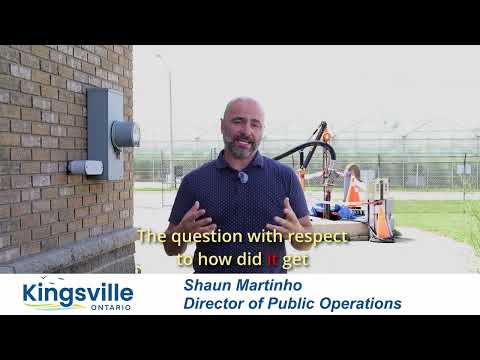
Video Series - What's Wrong with the Sewers in Ruthven?
Click here to play video
Video Series - What's Wrong with the Sewers in Ruthven?
Thank you for your contribution!
Help us reach out to more people in the community
Share this with family and friends